Stabilize Post-Meal Glucose Naturally with SugarLock
SugarLock™ is a patented, clinically-proven botanical extract developed to help individuals manage blood glucose levels naturally. By utilizing a high-potency polyphenol complex, SugarLock™ acts as a glucose gatekeeper, effectively inhibiting the enzymes responsible for sugar absorption.

Post-meal glucose spikes are becoming a central focus in metabolic health. In the United States alone, approximately 38 million people live with diabetes and an estimated 98 million adults have prediabetes—more than 80% of whom are unaware of it. [1,2] Blood glucose is also recognized by the American Heart Association as a core factor in cardiovascular health. [3]
Meanwhile, the rise of continuous glucose monitoring (CGM) has transformed consumer awareness. With the CGM market projected to expand significantly through 2033, real-time glucose tracking is no longer limited to clinical settings. [4] Consumers now see firsthand how meals impact their bodies—and they are actively seeking nutritional solutions that help smooth post-meal spikes.
How SugarLock™ Uses Natural Botanicals to Manage Blood Glucose Levels
Carbohydrate digestion is driven by two key enzymes:
- α-amylase, which initiates starch breakdown
- α-glucosidase, which converts carbohydrates into absorbable sugars
Polyphenol-rich botanical extracts have demonstrated in vitro ability to partially inhibit these enzymes, helping slow carbohydrate digestion and support a more gradual rise in post-meal glucose. SugarLock™ is a peanut-skin polyphenol extract designed to work at this critical digestive stage to support balanced glycemic response where it matters most.
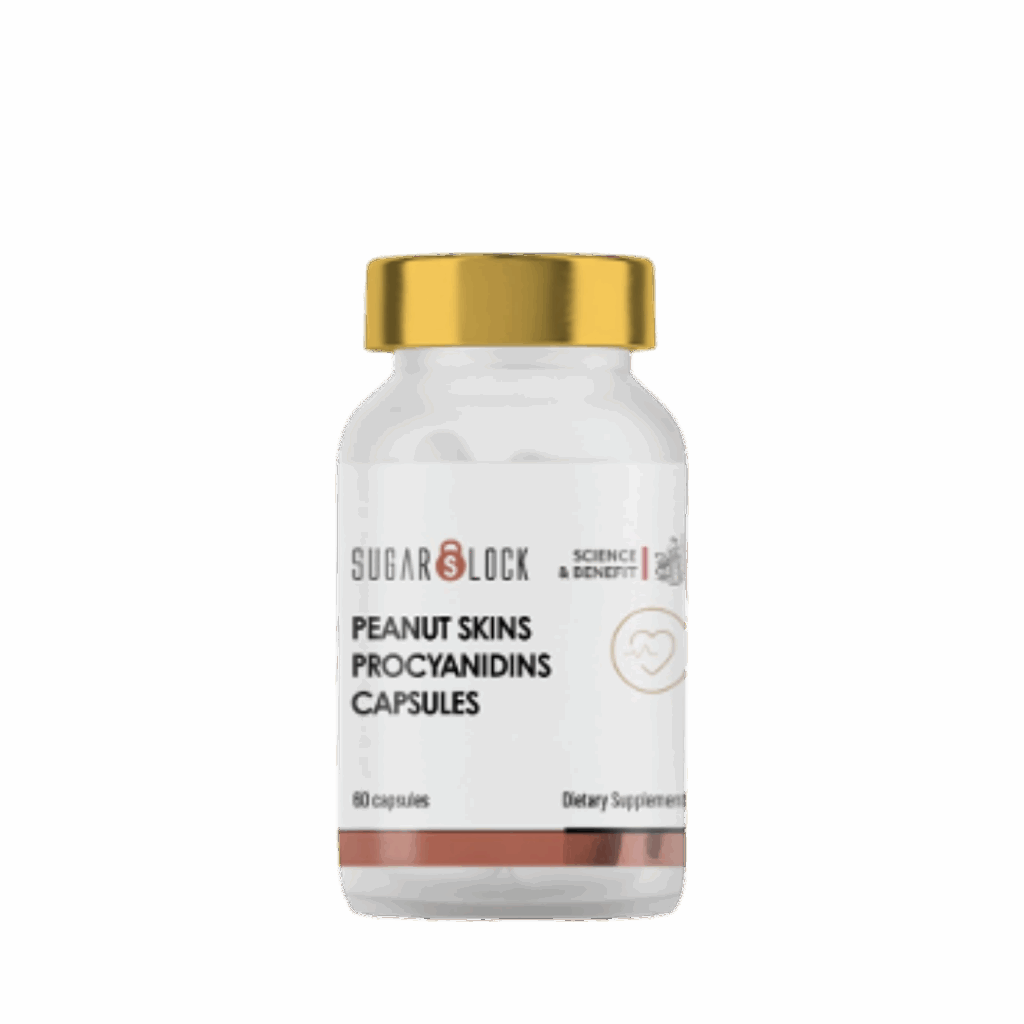
Clinical Evidence: How SugarLock™ Helps Manage Blood Glucose Spikes
Peanut skins are naturally rich in procyanidins and other bioactive polyphenols. Rather than discarding this material, SugarLock™ upcycles it into a high-value, standardized extract backed by emerging human data.
Research suggests peanut-skin polyphenols may: Inhibit α-amylase activity in vitro, help maintain healthy fasting glucose levels in adults with elevated baseline values, and support healthy body composition alongside a balanced lifestyle
In a six-week human study (n=31), supplementation with SugarLock™ was associated with: [5]
- ~7.4% improvement in fasting blood glucose among subjects with elevated baseline values
- ~2% reduction in body fat, with modest reductions in weight and waist/hip circumference
- MRI-indicated potential reduction in visceral fat over the intervention period
Designed for the Next Generation of Metabolic Formulas
As consumers demand measurable results and real-time metabolic insights, ingredient innovation must evolve accordingly. SugarLock™ delivers targeted digestive enzyme modulation supported by emerging human and CGM data—bridging scientific validation with practical, real-world application.
Sustainably sourced from upcycled peanut skins and standardized for consistency, SugarLock™ offers formulators a differentiated, mechanism-driven solution for next-generation metabolic health products.
With additional large-scale North American clinical research in development, SugarLock™ is positioned to help brands lead in the rapidly expanding glucose-support category where precision, transparency, and performance matter most.
References
- A report card: Diabetes in the United States infographic. (2024, May 15). Diabetes.https://www.cdc.gov/diabetes/communication-resources/diabetes-statistics.html
- Prediabetes: Could it be you? infographic. (2024, May 15). Diabetes. https://www.cdc.gov/diabetes/communication-resources/prediabetes-statistics.html
- Life's Essential 8™ – How to Manage Blood Sugar Fact Sheet. https://www.heart.org/en/healthy-living/healthy-lifestyle/lifes-essential-8/how-to-manage-blood-sugar-fact-sheet
- Continuous Glucose Monitoring Devices Market (2025–2033). Grand View Research. Retrieved December 5, 2025.
- Lin, Y., Lin, Y., & Shen, Y. (2017). Evaluation Effects of peanut skin extract on blood glucose regulation and body fat reduction. Journal of Biobased Materials and Bioenergy, 11(3), 242–247.