Weight Management with Breakthrough GLP-1 Innovation
GLP-1 Formula™ utilizes advanced bioactive compounds to modulate the gut-endocrine axis, specifically enhancing the endogenous secretion of glucagon-like peptide-1 (GLP-1) from intestinal L-cells. This supplement solution targets appetite suppression and blood sugar regulation by engaging the gut-endocrine axis, offering a convenient alternative for metabolic health.
GLP-1, or glucagon-like peptide-1, is a naturally occurring hormone in the human body that plays a critical role in regulating blood sugar levels, appetite, and insulin secretion.1 With the growing interest in weight management and metabolic health, GLP-1 supplements have emerged as a promising tool in addressing issues like obesity, diabetes, and even cardiovascular health.
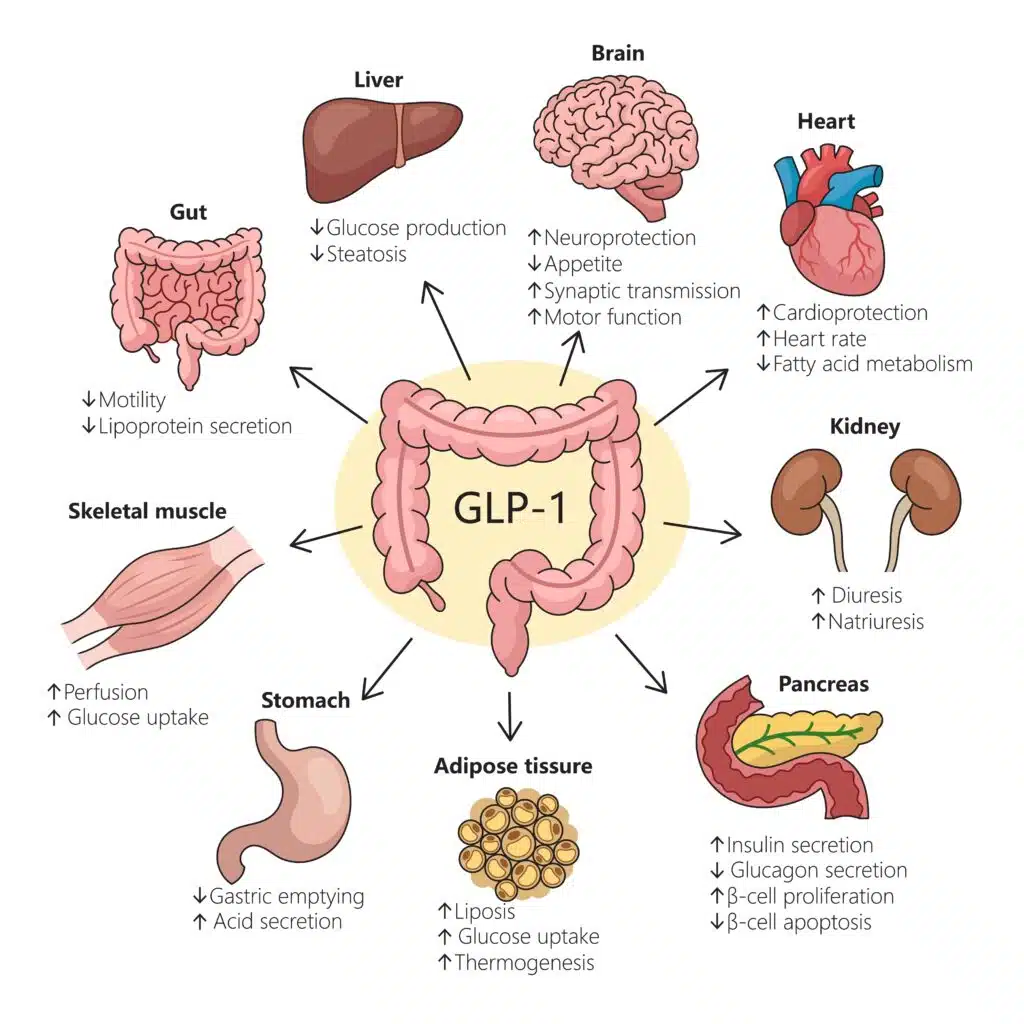
GLP-1, or glucagon-like peptide-1, is a naturally occurring hormone in the human body that plays a critical role in regulating blood sugar levels, appetite, and insulin secretion.1 With the growing interest in weight management and metabolic health, GLP-1 supplements have emerged as a promising tool in addressing issues like obesity, diabetes, and even cardiovascular health.

How GLP-1 Works
It is a hormone released in response to food intake, particularly from the gut. It signals the pancreas to produce insulin, helping to lower blood sugar levels after meals. It also slows down gastric emptying, which helps to regulate appetite by making people feel fuller for longer.2
GLP-1 receptor agonists, also known as GLP-1 analogs, are medications that help manage blood sugar levels in people with type 2 diabetes. They work by mimicking the hormone, which is naturally released by the intestine after eating. For those with type 2 diabetes, these medications trigger insulin production to control blood sugar levels.3 Additionally, they help reduce appetite and food intake, leading to weight loss. Although these drugs have been used to treat type 2 diabetes for nearly two decades, it was not until 2021 that the US FDA approved them for treating obesity.4
Managing Weight Naturally with TCI GLP-1 Formula™
Not everyone wants to take medications to control their weight, and they can be expensive and inaccessible to some. GLP-1 production can be increased by consuming healthy foods that also reduce the risk of cardiovascular disease and cancer. Foods containing healthy fats, such as salmon, herring, avocado, and olives, are great for raising the hormone's levels. High-quality protein from fish, chicken, and beans, along with soluble fiber from fruits, vegetables, and whole grains, are also excellent for raising GLP-1 level.5
A 2026 randomized, crossover clinical trial highlights GLP-1 Formula™ on immediate metabolic responses.6
- Sustained GLP-1 Levels:Following a glucose challenge, the formula group maintained GLP-1 levels 12.45-fold higher than baseline at 90 minutes.
- Glycemic Attenuation: Users experienced an approximate 9.7% reduction in blood glucose spikes compared to the water control group.
- Appetite Suppression: Clinical surveys showed a sustained trend toward reduced hunger and cravings for up to 270 minutes post-ingestion.
In a large-scale study involving 560 overweight and obese adults, the efficacy of GLP-1 Formula™ was demonstrated over a multi-week trial period.7
Key Performance Indicators:
- Average Weight Loss: Participants lost an average of 4.9 kg by the trial endpoint.
- High Success Rate: 59.3% of users lost at least 4 kg of their baseline body weight.
- Collective Impact: The participant group achieved a cumulative weight loss of 2,732 kg.
References
- Baggio, L. L., & Drucker, D. J. (2007). Biology of incretins. Gastroenterology, 132(6), 2131–2157.
- D'Alessio, D. (2016). Is GLP 1 a hormone: Whether and When? Journal of Diabetes Investigation, 7, 50-55.
- Drug Approval Package: Ozempic (semaglutide) Injection. (2018, January 16).https://www.accessdata.fda.gov/drugsatfda_docs/nda/2017/209637Orig1s000TOC.cfm
- FDA Approves New Drug Treatment for Chronic Weight Management, First Since 2014. (2021, June 4). FDA.https://www.fda.gov/news-events/press-announcements/fda-approves-new-drug-treatment-chronic-weight-management-first-2014
- Paniagua, J. A., De La Sacristana, A. G., Sánchez, E., Romero, I., Vidal-Puig, A., Berral, F. J., Escribano, A., Moyano, M. J., Peréz-Martinez, P., López-Miranda, J., & Pérez-Jiménez, F. (2007). A MUFA-rich diet improves posprandial glucose, lipid and GLP-1 responses in insulin-resistant subjects. Journal of the American College of Nutrition, 26(5), 434–444.
- Huang, S.-C., Lin, Y.-K., Lin, Y.-H., Chan, S.-T., & Chiang, C.-F. (2026). Modulation of postprandial GLP-1 secretion and glycemic responses by a food-grade GLP-1 formula in human subjects. Journal of Obesity & Weight Loss Therapy, 16(2), Article 878.
- Chiang, C.-F., Lin, Y.-H., Fu, C.-C., Wang, N.-Y., Chen, Y.-A., Chang, C.-F., & Chan, S.-T. (2024). Efficacy of GLP-1 formula on body weight in overweight and obese adults. Acta Scientific Medical Sciences, 8(10), 62-67.